
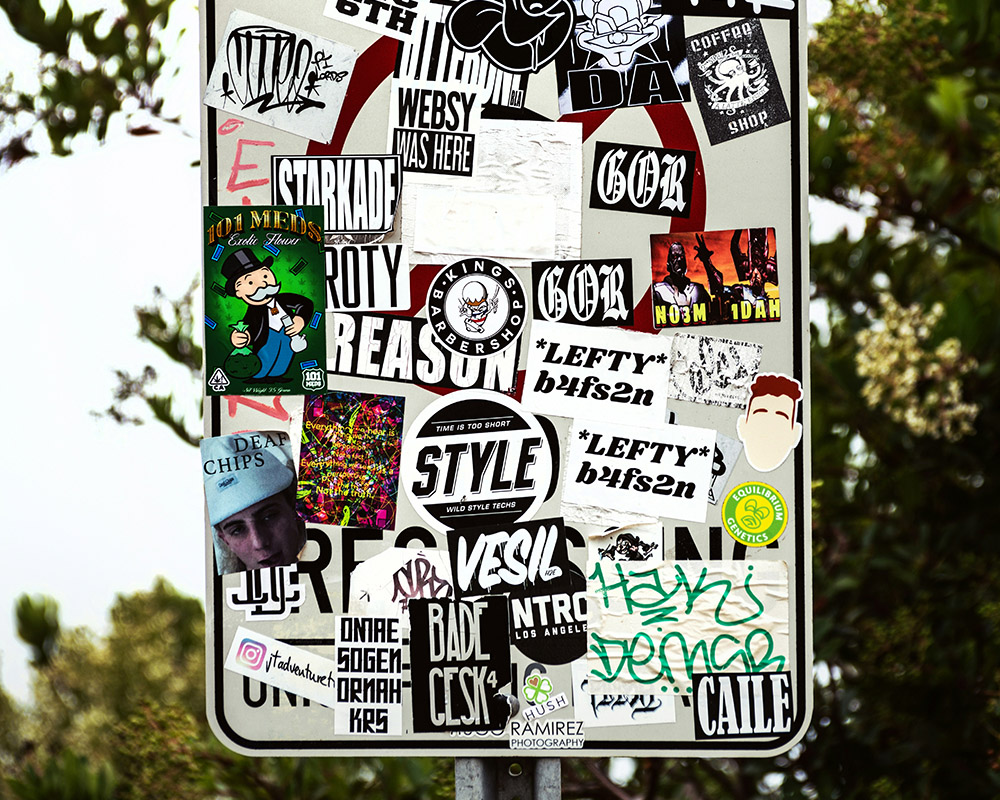
Yes. Almost all of the stickers we produce at Sticker Workshop can be made using materials suitable for outdoor use.
But there’s a little more to it than simply saying a sticker is “waterproof”.
A sticker on a toolbox has a very different life to one on the back window of a car. A sticker on a boat has different requirements again. And a promotional sticker that’s only expected to last for a year or two doesn’t necessarily need the same material as a decal that’s going to spend years exposed to sun and weather.
That’s why at Sticker Workshop we don’t believe there’s one vinyl that’s perfect for every job.
The trick is choosing the right material, adhesive and finish for where your sticker is actually going to be used.
Can your stickers get wet?
Yes. The vinyl materials we use for outdoor stickers are designed to cope with exposure to water and normal outdoor conditions. That makes them suitable for all sorts of applications including cars, windows, signs, equipment, machinery, toolboxes and plenty of other places where they’ll be exposed to the weather.
But water is only one part of the equation. Outdoor stickers also have to deal with sunlight, UV exposure, heat, cold, dirt, cleaning and general wear and tear. And that’s where choosing the right grade of vinyl becomes important.
Not all vinyl is the same
Two stickers can look almost identical when they’re brand new but be made from quite different materials. For everyday stickers and shorter-term outdoor applications, a monomeric vinyl can be an excellent and economical choice.
For longer-term outdoor applications, we can step up to a polymeric vinyl. Polymeric films generally have better dimensional stability and are designed for longer-term applications. In simple terms, if you’re putting a decal somewhere that’s going to live outdoors for a long time, polymeric vinyl is generally a better choice than a basic monomeric product.
There are more specialised films available beyond that as well. You don’t necessarily need to know which one you need before ordering.
Tell us where the sticker is going and what you expect it to do, and we’ll help choose the appropriate material.
Does lamination make outdoor stickers last longer?
It certainly can. For stickers that are going to have a harder life, we can apply a clear laminate over the printed vinyl. Think of the laminate as an additional protective layer over the print. It provides extra protection from things such as UV exposure, moisture, abrasion, handling and cleaning, and can significantly improve the durability of a printed sticker in demanding applications.
That doesn’t mean every sticker automatically needs to be laminated. A short-term promotional sticker and a decal that’s going to spend years on a vehicle have completely different requirements. We’ll recommend lamination when we think the application warrants it.
What about the adhesive?
This is the bit people often don’t think about. You can have fantastic vinyl and beautiful printing, but if the adhesive isn’t suitable for the surface you’re sticking it to, you’ve got the wrong sticker. We have access to different adhesive options depending on what you’re trying to achieve.
Permanent adhesive
This is what most people probably imagine when they think of a normal sticker. A permanent adhesive is designed to develop a strong bond to a suitable, properly prepared surface and remain there. It’s a good choice for stickers and decals that aren’t intended to be regularly removed or repositioned.
Permanent doesn’t necessarily mean “physically impossible to remove”. It means the adhesive has been designed primarily for a lasting bond rather than clean removal.
Removable adhesive
Sometimes you actually want the opposite. A removable adhesive is designed for applications where the sticker only needs to be there temporarily, like a few days or weeks, and you’ll eventually want to take it off. These can be useful for temporary promotions, displays, events (like motorsport events) and other short-to-medium-term applications.
There are limits, though. A removable vinyl left in place far beyond its intended service period may become more difficult to remove cleanly. Again, knowing how you’re going to use the sticker helps us choose the right material.
What is high-tack vinyl?
Sometimes the problem isn’t how long you want the sticker to last. The problem is getting it to stick in the first place.
Some surfaces are notoriously difficult for standard self-adhesive vinyl. Certain plastics, powder-coated surfaces, machinery, equipment and textured or low-energy surfaces can require a much more aggressive adhesive. That’s where high-tack vinyl comes in.
High-tack materials use a stronger adhesive designed to achieve a better bond on difficult surfaces where a conventional vinyl may struggle. If you’ve previously tried putting stickers onto something and found the edges lifting or the sticker simply doesn’t want to stay attached, tell us what the surface is. Changing the adhesive may be the answer.
What is air-release vinyl?
If you’ve ever tried to apply a large sticker and ended up chasing bubbles around underneath it, you’ll understand why air-release vinyl exists.
Air-release materials have tiny channels incorporated into the adhesive system that allow trapped air to escape while the graphic is being applied. That can make larger decals significantly easier to install and helps achieve a smoother, bubble-free finish. Some air-release products are also repositionable during installation, allowing the graphic to be moved into the correct position before the adhesive develops its final bond.
We generally consider this type of material best for most stickers, but especially when the size of the decal and the way it needs to be installed make application more challenging. For a large vehicle or equipment decal, it can make a very big difference.
So what’s the best outdoor sticker?
There isn’t one. And that’s actually the point. The best sticker for your job depends on questions such as:
- Where is it going?
- Will it be indoors or outdoors?
- How long do you want it to last?
- Will it be exposed to direct sunlight?
- What surface are you sticking it to?
- Is the surface smooth, textured, painted, powder coated or plastic?
- Does it need to be removable later?
- Is it large enough that easier installation would be useful?
- Will it be regularly handled, cleaned or exposed to abrasion?
- Does the print need the additional protection of lamination?
A basic promotional sticker doesn’t need to be engineered like a long-term machinery decal. Likewise, saving a few dollars by using an entry-level material doesn’t make much sense if the sticker needs to survive years outside.
Tell us what you’re sticking it to
This is probably the best advice we can give. Don’t just tell us that you need a sticker. Tell us what you’re going to do with it.
If it’s going on a car, tell us. If it’s going onto a powder-coated toolbox, tell us. If you need it to come off cleanly after an event, tell us. If it’s going on machinery and you want it to stay there for years, definitely tell us. You don’t need to know whether you need monomeric, polymeric, permanent, removable, high-tack or air-release vinyl.
That’s our job.
Tell us what you’re trying to achieve and we’ll help you choose the material, adhesive and finish that gives your sticker the best chance of doing exactly what you need it to do.

